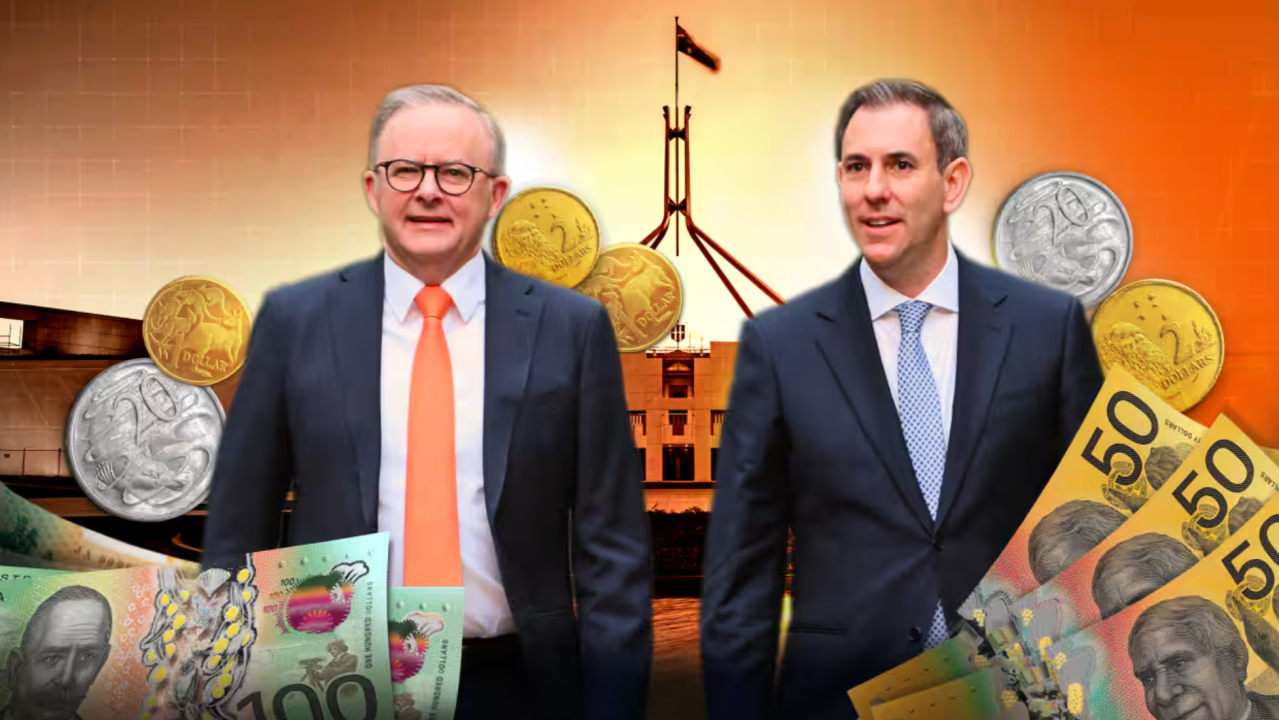
If you watched the Australian federal budget coverage last night, you witnessed one of the most spectacular election promise demolition derbies in recent memory. Treasurer Jim Chalmers took a blowtorch to capital gains tax, family trusts and any incentive to start or grow a business on Australian shores.
But I want to talk about something the budget commentary is largely missing.
What this means for your customers. And by extension, for your business.
I believe we are about to enter what I am calling the anxiety economy. And the businesses that recognise it early will be the ones that come out the other side intact.
Here is what that looks like.
Real wages falling 1.75 per cent. Inflation tipped to hit 5 per cent, possibly 7 if the war in Iran escalates. Capital gains tax wound back. Negative gearing restricted. Family trusts facing a 30 per cent minimum tax rate from 2028. For a significant portion of the Australian consumer base — business owners, investors, property holders, professionals — this budget lands as a signal. A tightening. A quiet instruction to be more careful.
And careful consumers are expensive.
This is the part most businesses underestimate. The direct cost of a hesitant customer is visible enough – longer sales cycles, lower conversion, deals that stall. But the downstream costs are far more damaging.
Hesitant customers comparison shop longer. They consume more of your team’s time before they commit. They ask for discounts, delay decisions, and when they do buy, they carry a higher level of post-purchase doubt. That doubt makes them harder to retain, slower to refer, and quicker to leave at the first sign of friction.
In a confident economy, a good product and a decent experience is often enough. Customers give you the benefit of the doubt. They round up.
In an anxiety economy, they round down.
Every point of friction becomes a reason to pause. Every unanswered question becomes a reason to walk away. Every gap between what was promised and what was delivered becomes a reason to tell someone.
This is not pessimism. It is pattern recognition. The businesses that struggled most in previous contractions were not the ones with the weakest products. They were the ones that built their customer experience for a generous customer – and never adjusted when generosity ran out.
So what does work in an anxiety economy?
Certainty. Delivered consistently, at every touchpoint.
Not guarantees or disclaimers. Certainty in the sense of a customer who finishes every interaction feeling that they made the right decision. That they are in good hands. That if something goes wrong, someone will show up.
When consumers are anxious, confidence becomes the product. The businesses that understand this will not compete on price — discounting in an anxiety economy simply trains customers to wait for the next offer. They will compete on trust. On clarity. On the kind of experience that removes doubt before it has a chance to form.
We are heading into a period where the customer experience your business delivers will matter more than it has in years. Not because it is a nice thing to invest in.
Because in an anxiety economy, it is the only sustainable competitive advantage left.
The brands that earn trust now will not just survive this period.
They will own what comes after it.
If your leadership team is thinking about how to position your customer experience for what is ahead, I would love to be part of that conversation.